
In much the same way most businesses are not struggling to collect data, they are struggling to use it effectively, AI is being implemented but seldom with effective outcomes because the integration into workflow and process is the "job" while measuring the outcome happens later — or sometimes never at all.
AI needs to work for you. It is a powerful tool, just like data, but it has to be deployed in the right way. That is where decades of experience in data, IoT, and machine learning bridge the gap — many of the solutions managers are asking for have been built in some form or another by Skylytics.
The convergence of the Internet of Things (IoT), artificial intelligence (AI), and real-time analytics has created a new competitive opportunity: continuous intelligence. Companies that successfully embed AI into operational workflows are seeing measurable gains in profitability, efficiency, and customer satisfaction.
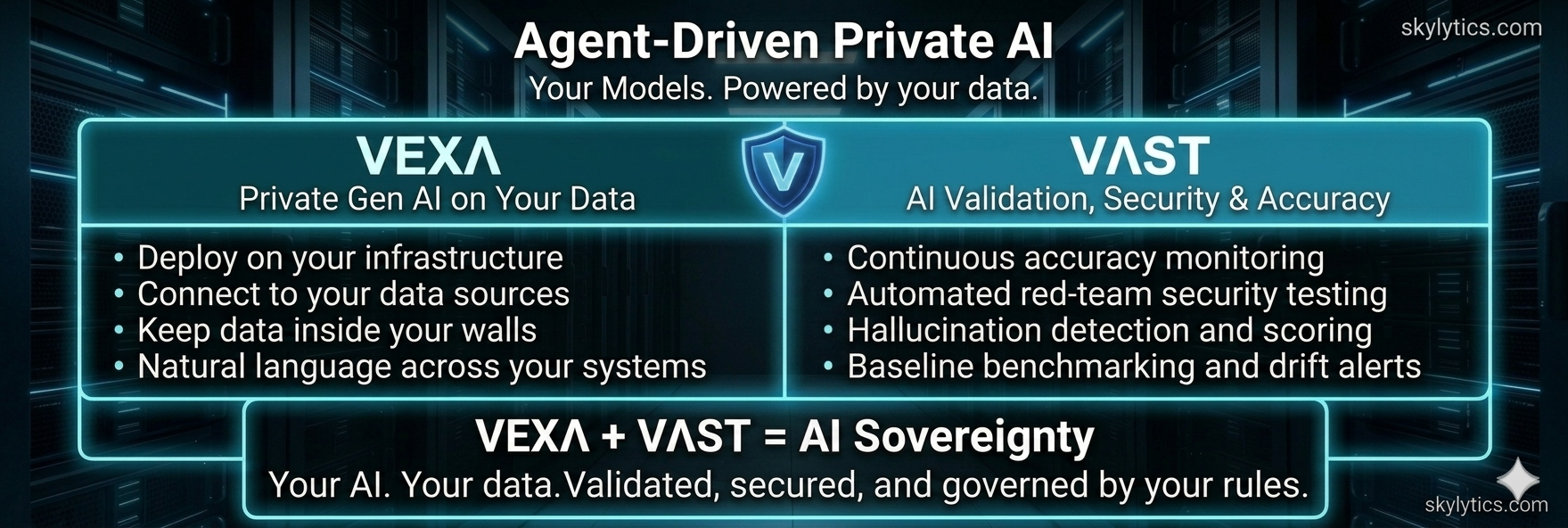
The solution that helps transform raw data into actionable intelligence is not one-size-fits-all. The answers could lie in adding sensors, software, data engineering, and other initiatives. Skylytics stands out by having a wide range of successful case studies and broad experience across industries and departments to tell AI what to do. AI is only as good as its inputs and prompts — but it can be forgetful and even hallucinate. Checking the work, cross-referencing, and optimizing AI is where the real differentiation and advantages take hold.
AI, like IoT and data engineering, is a piece of the puzzle. Understanding how these fit together, what fits your context, and what the real goal is will be the difference between losing time integrating AI and achieving seamless operation.
We have all seen the headlines — AI is rolled out and then rolled back almost as quickly, because real-world outcomes did not meet the expectations that drove the initial idea to use AI in the first place.
AI assimilation doesn't have to be hard
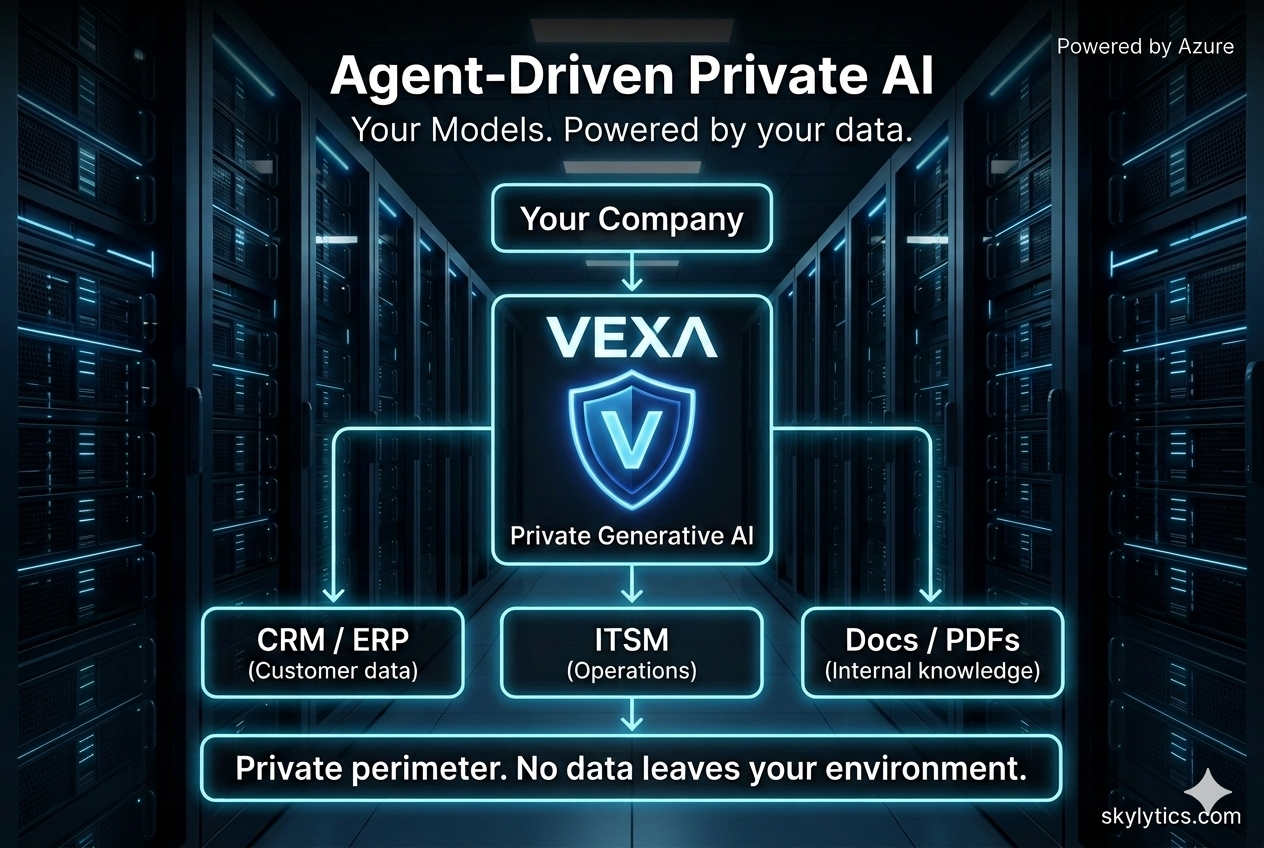
Skylytics specializes in implementing continuous intelligence systems, where data flows from connected devices into analytics platforms and directly informs business decisions in near real time.
This enables:
- Immediate detection of operational inefficiencies
- Predictive insights into future performance
- Automated decision-making through machine learning models
By embedding AI into everyday workflows, companies move from reactive operations to proactive optimization. The Skylytics advantage is in working from the customer's outcome goals and developing solutions that deliver those results — not merely an AI layer on top of existing operations left to run unchecked.
AI-powered continuous improvement across industries
Skylytics' solutions are industry-agnostic, enabling transformation across sectors:
Manufacturing
- Monitor equipment health and optimize production lines
- Reduce defects through real-time quality analytics
Logistics and supply chain
- Track assets and shipments with environmental intelligence
- Improve delivery reliability and customer satisfaction
Smart buildings and energy
- Optimize energy consumption using occupancy and usage data
- Reduce operational costs through automation
Healthcare and life sciences
- Ensure compliance in temperature-sensitive environments
- Enhance patient safety and operational efficiency
Retail and customer experience
- Analyze customer behavior and sentiment in real time
- Align operations with demand patterns
Why AI + IoT integration is a competitive imperative
Organizations that fail to integrate AI into workflows risk falling behind competitors who operate with real-time visibility, automate decision-making, and continuously optimize performance.
By contrast, companies leveraging Skylytics' expertise gain:
- Faster time-to-insight
- Reduced operational risk
- Increased profitability through efficiency gains
- Stronger customer outcomes
The future of enterprise success lies not in collecting data or using AI — it is in continuous intelligence that drives continuous improvement. That has to be set and then managed in a way that does not just pile AI and data into organizational workflows, but measures and monitors outcomes.
Learn More: Contact Us


.png)



.png)

.png)